


Professional LASIK Eye Surgery for Clear Vision in Indianapolis
Are You a LASIK Candidate?
LASER VISION SURGERY
Trust your eyes to Price Vision Group, Indiana’s first and most experienced LASIK provider! Give us a call at (317) 814-2933. LASIK (Laser-Assisted in situ Keratomileusis) is a laser vision correction procedure that can treat myopia (nearsightedness), hyperopia (farsightedness), and astigmatism to reduce or eliminate the need for glasses or contact lenses. LASIK is accurate, safe, and has a very short recovery time with minimal discomfort.
How LASIK Works to Correct Your Vision
LASIK reshapes the eye’s front surface, called the cornea, to improve focus. Light entering the eye bends correctly, delivering clear vision without glasses or contacts. Unlike temporary correction from lenses, LASIK provides continuous vision enhancement. With each glance, patients enjoy improved clarity, day and night.

LASIK for Nearsightedness (Myopia)
LASIK is widely used to treat nearsightedness, a condition where close objects are clear, but distant ones are blurry. In this procedure, the laser reshapes the cornea to flatten it, which helps light rays focus directly on the retina, delivering clearer vision for distance.

LASIK for Farsightedness (Hyperopia)
For patients with farsightedness, where distant objects appear clearer than close ones, LASIK reshapes the cornea to be steeper. This adjustment enhances the cornea’s focusing ability, allowing for improved clarity in near and intermediate vision.

LASIK for Astigmatism
Astigmatism causes distorted or blurred vision due to an irregularly shaped cornea. LASIK corrects this by smoothing and reshaping specific parts of the cornea. This creates a more even curvature, enabling light to focus correctly on the retina for sharper vision.

Custom LASIK (Wavefront-Guided)
Custom LASIK, or wavefront-guided LASIK, uses advanced technology to map the unique characteristics of your eye. This type provides a highly personalized treatment plan, adjusting for even minor irregularities in the cornea, delivering optimized vision results and reducing glare and halos.
Bladeless LASIK (All-Laser LASIK)
Bladeless or all-laser LASIK uses a femtosecond laser instead of a microkeratome blade to create the corneal flap. This approach increases precision and may lead to faster recovery times and less discomfort, appealing to those seeking an all-laser experience.
How LASIK Works to Correct Your Vision
LASIK reshapes the eye’s front surface, called the cornea, to improve focus. Light entering the eye bends correctly, delivering clear vision without glasses or contacts. Unlike temporary correction from lenses, LASIK provides continuous vision enhancement. With each glance, patients enjoy improved clarity, day and night.

The latest technology for the best results
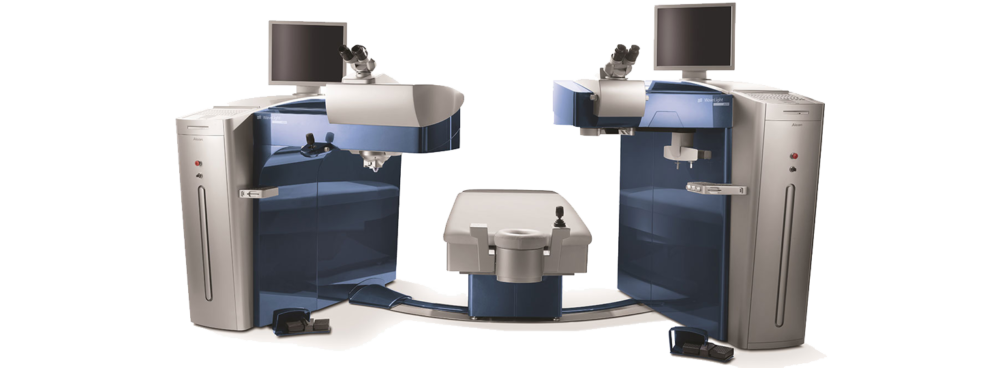
Price Vision Group has invested in the most advanced FDA-approved LASIK technology to ensure the safest, most precise laser vision correction procedures to provide excellent visual outcomes. The LASIK surgeons at Price Vision Group perform their laser eye procedures with the WaveLight® Refractive Suite from Alcon.

Technology
Price Vision Group is proud to be the first in Indiana to offer the latest in LASIK technology. PRK (1991) Modern LASIK technology (1995) All-laser, bladeless LASIK (2003) CONTOURA® Vision (topography-guided) LASIK (2016)

Experience
Price Vision Group is the first vision center in Indiana to perform LASIK and helped write the LASIK guidelines for the American Academy of Ophthalmology.
A 3-step journey to better vision
Step 1
Free LASIK screening
Step 2
Comprehensive LASIK eye exam
Step 3
LASIK procedure



The latest technology for the best results
Price Vision Group has invested in the most advanced FDA-approved LASIK technology to ensure the safest, most precise laser vision correction procedures to provide excellent visual outcomes. The LASIK surgeons at Price Vision Group perform their laser eye procedures with the WaveLight® Refractive Suite from Alcon.
Want To See If LASIK Is Right For You?
The first step towards visual freedom is a free consultation with
one of our vision experts.
Book an appointment below!
Understanding LASIK: Advanced Laser Vision Correction at Price Vision Group
What is LASIK?
LASIK (Laser-Assisted in situ Keratomileusis) is a laser vision correction procedure that uses a special ultraviolet laser called an excimer laser to correct a person’s vision. This particular method of laser eye surgery reshapes the cornea, the clear front “window” of the eye, so that light focuses precisely on the back portion of the eye called the retina. LASIK is used as a vision correction procedure for refractive errors such as myopia (nearsightedness), hyperopia (farsightedness) and astigmatism to reduce or eliminate the need for glasses or contact lenses.
A Two-Step Process To Better Vision
LASIK is a two-step process that uses two different lasers: the femtosecond laser and the excimer laser.
Step 1
The Femtosecond Laser
Step 2
The Excimer Laser
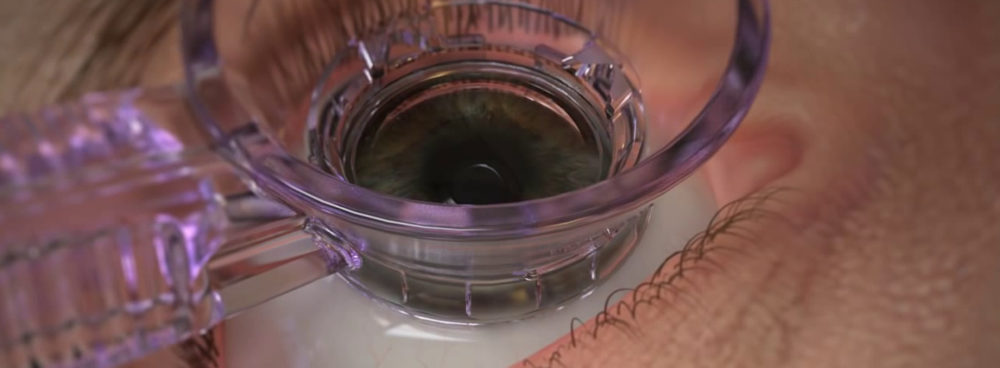
The femtosecond laser is used to create the LASIK flap. First, a suction ring is gently placed on the surface of the eye. Second, the applanation cone lowers to dock with the suction ring. During this process, the patient may feel a slight pressure on the eye, and the vision might go black. The femtosecond laser takes approximately 6 seconds to create a standard LASIK flap.
After the LASIK flap is created for each eye, the patient pivots over to the excimer laser. The surgeon gently lifts the LASIK flap and the excimer laser begins to treat the eye. The excimer takes about 1.4 seconds per diopter of treatment. For example, if your prescription is -3.0, the excimer laser takes about 4.2 seconds to treat your prescription.
LASIK Frequently Asked Questions (FAQ)
If you are 18 or older, your eyes have probably finished developing. Most people have a stable prescription by age 21. To see if you are a candidate, fill out the form below to schedule a free evaluation today.
People often have LASIK in their 40s and 50s, though sometimes a refractive lens exchange may make be a better option. An evaluation with our doctors will help you figure out what is best for you!
For most people, yes, it will. For years we have been able to correct reasonable amounts of astigmatism with LASIK thanks to advances in technology. If you have extreme astigmatism, other options such as an implantable contact lens (ICL) may be a better option for you. A consultation with one of our doctors can determine what is best for your individual eye physiology.
Perhaps. Many people hear this from other providers, but then come to our practice and find out that they are actually a good LASIK candidate (example). Having a thin cornea can be associated with keratoconus, which would disqualify you from traditional LASIK. However, many people have thinner than normal corneas absent of other conditions and are fine candidates for LASIK. As experts in identifying and treating a broad spectrum of eye conditions, our doctors are exceptionally qualified to make these determinations.
For those who truly are not candidates, we offer alternatives such as implantable contact lenses (ICLs) and PRK which many patients find to be great alternatives, with some kind enough to share their experiences with these other procedures.
Numbing eye drops are used during surgery so there is minimal discomfort. During the creation of the LASIK flap, you will feel some pressure on your eye but most patients will not consider the sensation to be painful.
What our patients had to say about pain and their experience with LASIK.
LASIK is very safe, and in fact, is actually safer than contacts in a number of ways. In our recent 1800 patient study comparing patients wearing contacts to patients that had LASIK, patients wearing contacts were more than twice as likely to have incidences of corneal infection, corneal ulcers, and corneal abrasions.
Numerous clinical studies have shown that the risk of serious complications from LASIK is low. In that same 1800 patient study, only 1% of patients thought that they were worse off after LASIK compared to contacts when asked three years following surgery. In the rare cases when LASIK does not work for someone, reverting to wearing glasses or contacts can usually correct the issue.
No. With over 40 million people treated worldwide since 1991, there have been no reports of blindness as a direct result of a LASIK procedure.
This question (unlike the first three) is a bit more nuanced. In our 1800 patient study, the group of patients who wore contacts and then had LASIK had a higher proportion report having some level of dryness in the first year after surgery compared to before surgery. However, this group on average got better in years 2 and 3, with lower percentages of patients reporting dryness than before surgery.
For those who had LASIK to replace wearing glasses, a higher proportion reported having some level of dryness in the first year after surgery compared to before surgery. While this proportion improved in years 2 and 3, it did not reach the pre-LASIK level. This was consistent with many of the glasses wearers actually being unable to wear contacts comfortably.
The use of artificial tears after surgery can be extremely helpful for maintaining comfort and limiting dryness. Many patients who complained of dryness also reported not using any tears, which is not optimal from either a comfort or medical perspective.
In thousands of cases, we have actually never met anyone who likes the idea of having their eye operated on; however, all of them have done fine with LASIK. The actual LASIK procedure takes only a few minutes at most, so it is over quite quickly. Additionally, our expert staff will keep you relaxed and comfortable throughout the procedure and your eyes will be numbed with drops.
Many of our patients report being more sensitive than average or more scared than average, but in the end, get through surgery just as well as everyone else!
Some of our patients were nervous about LASIK too. They share their LASIK experience and how we helped calm their nerves.
Yes. The recovery is so fast (typically one day or less) that almost everyone prefers to have both eyes treated on the same day. This adds the convenience of having one surgery date and one recovery period. Additionally, this means that your vision will be matched in both eyes, which is easier on your brain.
LASIK recovery is pretty fast and most patients can drive within one or two days. We don’t recommend that you drive until after a doctor has seen you for your 1-day post-operative appointment.
You will be required to come in for a 1-day post-operative appointment but you can usually return to work the next day, although it is advisable to take 24 hours off following surgery, particularly if you work in dusty environments or perform strenuous work. We recommend that you leave some cushion in place though, and not schedule important meetings or major trips immediately in the rare case healing takes a couple of extra days.
LASIK uses a laser to permanently change the shape of your cornea to correct your vision. There can be tiny fluctuations in your vision up to 3-6 months after your surgery.
Many people that have had LASIK in the past that now require reading glasses might mistakenly think that their LASIK “has worn off.” This is usually incorrect. As we age, we require reading glasses due to the natural aging process of the crystalline lens inside our eye. This condition, known as presbyopia, affects everyone whether they’ve had LASIK or not.
There is a small percentage of patients that require an additional LASIK procedure, also known as an “Enhancement.” People heal differently, and this matters especially for high levels of refractive correction where minor differences in healing will make a bigger difference. Since your vision can fluctuate for up to 3-6 months after your surgery, we usually have you wait that period before looking at enhancement options. In the event that you heal such that vision is less than expected after your initial LASIK treatment, we can perform an enhancement. Enhancements within the first year after LASIK are included in the price of LASIK performed by Dr. Price or Dr. Feng.
One of the common myths about LASIK surgery is that it causes people to need reading glasses. When we are young, assuming our cornea has the correct curvature, our natural lens allows us to focus both up close and far away by changing its shape. As we reach age 40-50, regardless of whether we have had LASIK or not, our natural lens will get stiffer and stop changing focus as well. This condition is called presbyopia.
Most LASIK patients, even those in their 40s and 50s, choose to have LASIK to ensure that they have excellent distance vision since that is what is most important for activities where wearing glasses is a hindrance. However, other patients prefer to have one eye optimized for near vision and one eye for distance vision.
Results
At Price Vision Group, we developed our own nomogram to treat our LASIK patients. This nomogram can only be found at Price Vision Group. Using our nomogram, 80%* of our CONTOURA® Vision LASIK patients are seeing better than 20/20!
Experience
Dr. Price is the first person to perform LASIK in the state of Indiana and helped write the guidelines on LASIK for the American Academy of Ophthalmology. Dr. Price and Dr. Feng are both fellowship-trained cornea experts and were the first two doctors to use the latest in LASIK technology, CONTOURA® Vision. Dr. Price and Dr. Feng have trained over 600 ophthalmologists from 35 countries on advanced eye surgery techniques. When it’s your eyes, go where the surgeons go. Price Vision Group is often referred to high difficulty surgery cases based on our extensive experience and expertise.
Technology
Price Vision Group is proud to be the leader in LASIK. We make sure our patients have access to the latest, safest, and most effective LASIK technology. This passion has led us to be the first in Indiana to perform LASIK, the first in Indiana to upgrade to bladeless LASIK, and the first in Indiana to introduce topography-guided CONTOURA® Vision LASIK.
9002 N Meridian St #100, Indianapolis, IN 46260 (317) 844-5530
Our Indianapolis location on North Meridian Street offers a modern, comfortable environment designed with your care and convenience in mind. The Price Vision Group facility sits in a professional medical complex that's easily identifiable by its contemporary architectural design and well-maintained landscape. We see patients from Indiana cities including Zionsville, Fishers, Carmel, Noblesville, Avon, and Greenwood, as well as people who travel from across the U.S. and even abroad for treatment by our renowned physicians.
Once inside, you'll find a welcoming reception area with ample seating and a patient-focused layout that minimizes wait times. Our surgical suite houses the latest diagnostic and treatment technology, ensuring you receive the most advanced care available.
Price Vision Group
9002 N Meridian St #100, Indianapolis, IN 46260
(317) 844-5530
For Lasik, EVO ICL, and refractive lens exchanges, please call (317) 814-2933
The center provides convenient on-site parking directly in front of the building, eliminating long walks or parking fees. Located in the prestigious Meridian North corridor, our facility is surrounded by professional offices and upscale amenities, creating a professional atmosphere that reflects the quality of care you'll receive.
Office Hours
- Sunday, Closed
- Monday, 8 AM–5 PM
- Tuesday, 8 AM–5 PM
- Wednesday, 8 AM–5 PM
- Thursday, 8 AM–5 PM
- Friday, 8 AM–5 PM
- Saturday, Closed
Copyright 2026 Price Vision Group. All rights reserved.
(317) 844-5530